
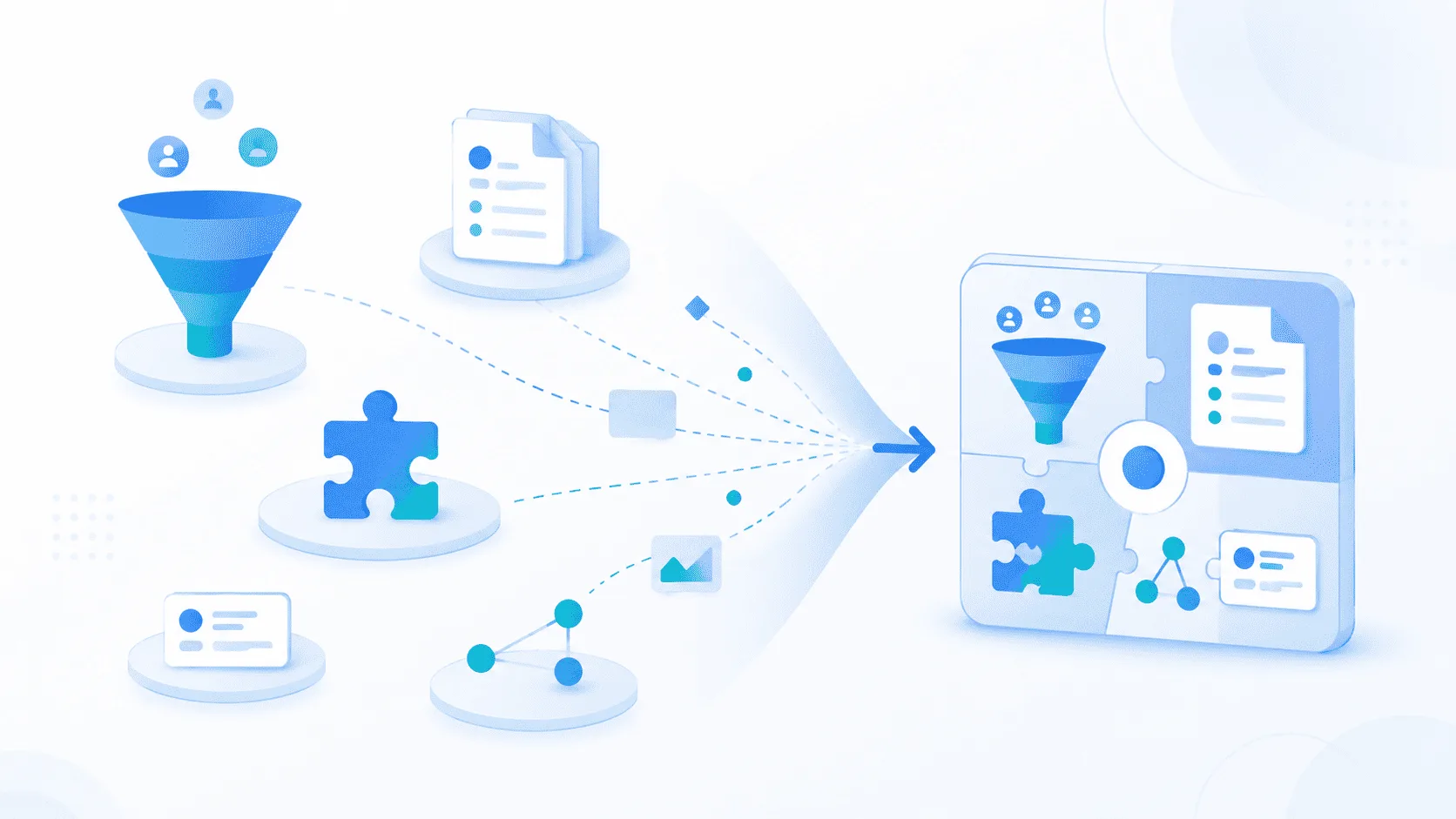
What do I need to prepare before implementing CRM software? Mainly one thing before anything else: a clear picture of how the team actually sells today, how many stages the pipeline has, and who approves what at each stage. Before even talking about the tool or its features, that's the real question to ask, since upfront preparation largely determines whether the project goes smoothly or drags on.
Why does preparation matter more than the choice of tool?
A CRM, even a customizable one, can only reflect a sales process if that process is already clear in the mind of the team running it. Walking into a scoping meeting without knowing exactly how many stages the sales pipeline has, or who approves what at each stage, inevitably extends the project, since those points then have to be clarified at the same time as configuring the tool. The choice of CRM software matters less at this stage than the clarity a team brings into the room.
What should good CRM software preparation include?
Serious support starts before the technical configuration itself. This typically includes a listening phase to understand the existing sales process, identifying the fields and information genuinely useful to the sales team's daily work, and clarifying everyone's role in the pipeline. This upfront preparation prevents ending up with CRM software that just looks like a generic tool wearing a different skin, rather than a real reflection of how the company actually sells.
What should be gathered before the first scoping meeting?
Three things make a real difference at kickoff:
✅ Sales cycle stages — a description, even an informal one, of how a deal moves from first contact to close
✅ Customer history — an honest read of where it currently sits and roughly how much of it there is
✅ Tools already in daily use — a simple list, to anticipate the connections the future CRM software will need
How do you map out your current sales rocess without formal documentation?
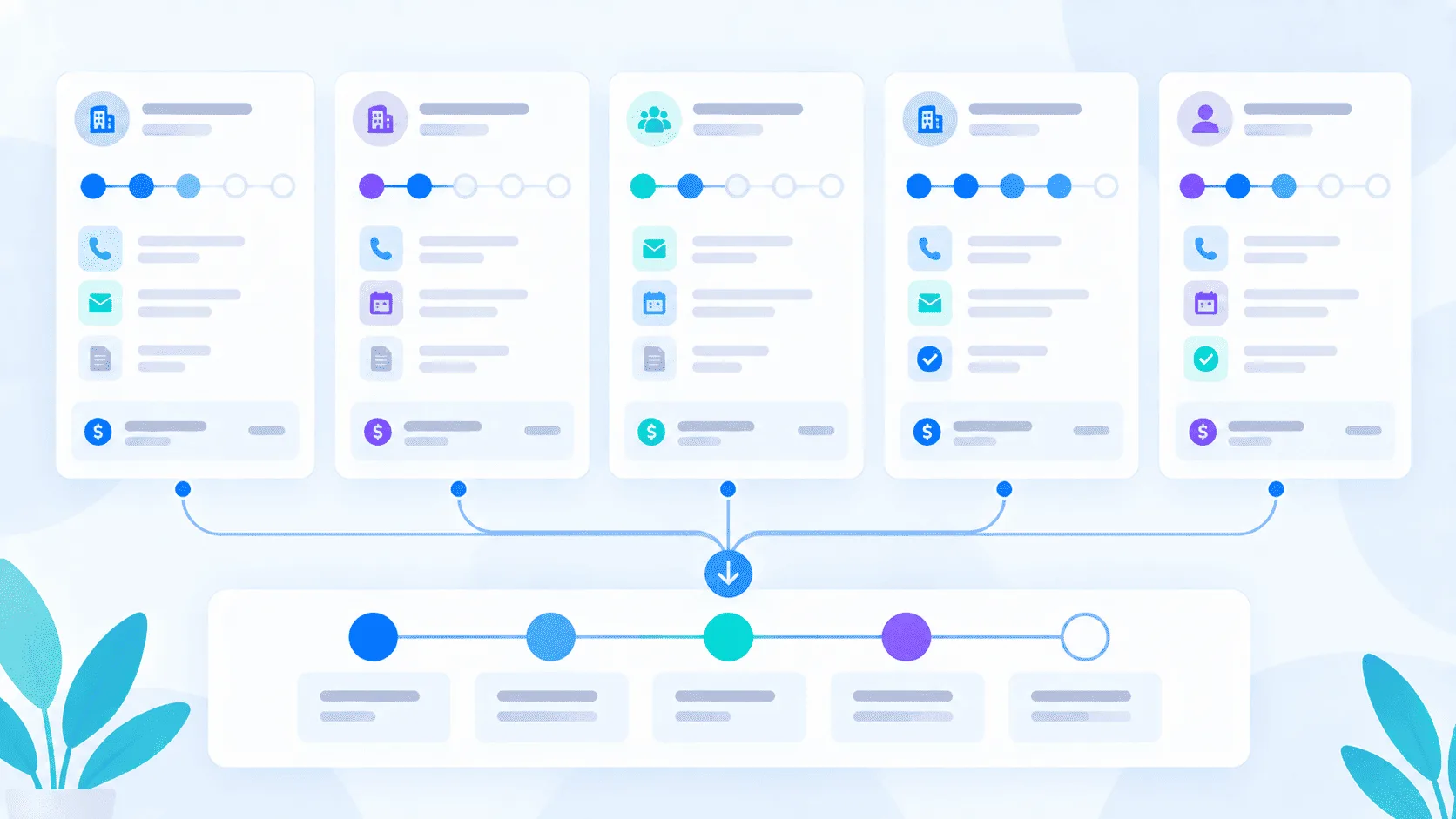
Most teams have never written their sales process down, and that's fine, it doesn't need to start as a polished document. A simple exercise works well: walk through the last five deals that closed, and note down every distinct step each one went through, from first contact to signature. Patterns usually emerge quickly, and what looked like an unclear process on paper turns out to have a fairly consistent shape once a few real examples are laid out side by side.
What role does existing customer data play in preparation?
Customer history rarely lives in one place before implementation, it's split across a spreadsheet, an inbox, and a few people's memory of past conversations. Preparation means locating where this information actually sits, roughly how much of it there is, and how messy or clean it looks. This isn't about cleaning everything up before the project starts, it's about giving the team implementing the CRM software an honest picture of what needs to be migrated.
Which existing tools need to be inventoried before implementation?
Every tool the sales and customer-facing teams touch daily is worth listing: the messaging platform, the invoicing or payment tool, an e-signature service, a calendar system. This list becomes the basis for deciding which integrations actually matter versus which ones sound nice but wouldn't get used. Skipping this step often means integrations get added reactively later, at extra cost and with more disruption than if they'd been scoped from the start.

Does customer management change much after implementation?
Yes, and that's precisely the point. Before, customer management often relies on shared memory spread across several people, with information scattered around. After good preparation and a successful implementation, every customer has a complete, centralized record, with exchange history directly accessible without having to ask a colleague what happened during the last contact.
Who inside the company should be involved in this preparation phase?
Preparation works best with input from the people actually running the sales process day to day, not just management describing how the process should ideally work. A salesperson's honest description of what actually happens at each stage, including the workarounds and shortcuts nobody wrote down, is worth more than an idealized version handed down from above. Involving at least one or two frontline team members alongside whoever owns the decision keeps the configuration grounded in reality.
What common mistakes happen when a company skips preparation?
The most frequent one is arriving at the scoping meeting expecting the provider to define the sales process from scratch, which shifts work that belongs to the company onto a vendor who doesn't know the business. Another is underestimating how much customer data actually needs migrating, which then surfaces mid-project as a delay. And some teams skip listing existing tools entirely, only to discover a needed integration wasn't scoped once the CRM software is already being configured.
How does good preparation affect the overall project cost and timeline?
Preparation doesn't add cost, it protects the estimate already given. Most of what drives a custom CRM software project past its initial quote comes from discoveries made mid-project that better preparation would have caught upfront: more data than expected, an integration nobody mentioned, a sales process more complex than the first description suggested. Arriving prepared keeps the project closer to its original timeline and price.
Does preparation differ for a business already adapted to a specific industry?
Slightly. A business in one of the industries already covered by existing adaptation work benefits from a head start, since the vocabulary and pipeline structure are already mapped out. Preparation still matters, but it focuses more on confirming the existing model fits than on defining everything from a blank page.
FAQ
Does the sales pipeline need to be formally documented before contacting a provider?
No, but having a clear idea of the main stages, even informally, significantly speeds up the scoping phase and avoids unnecessary back-and-forth.
How long does this preparation phase take?
Usually a few days to a week, running alongside regular activity, before the actual configuration of the tool begins.
What happens if the sales process changes during the project?
A customizable CRM stays flexible, adjustments remain possible after the initial implementation, without having to rebuild everything from scratch.
Can preparation be done without help from the provider?
Yes, most of it, gathering sales cycle stages, customer data locations, and a tool inventory can be done internally before the first scoping call, which tends to make that call more productive.
Does skipping preparation delay the implementation timeline?
It can, since anything not clarified upfront usually surfaces during configuration instead, which extends the timeline rather than shortening the work overall.
Discover MONARK CRM, a customizable CRM, already built, adapted to your business.