Does a custom CRM actually work for my specific industry? Yes, and that's precisely the point of building one: a construction sales rep doesn't talk about a "site" the same way a real estate agent talks about a "listing," and neither of them uses the vocabulary a B2B consultant uses to track their "engagements." A real custom CRM doesn't just translate these words in the interface, it adapts the very structure of the sales pipeline to the reality of each industry, something a generic tool can't do.
Why does a generic CRM never really fit a specific industry?
A generic CRM imposes a structure designed to suit everyone, which in practice means it perfectly suits no one. A real estate agency doesn't need the same fields as a solar energy installer, who in turn doesn't need the same structure as a training center. Forcing everyone into the same mold pushes teams to work around the tool with poorly used free-text fields, which ends up recreating the same mess as before, just inside a more expensive tool.
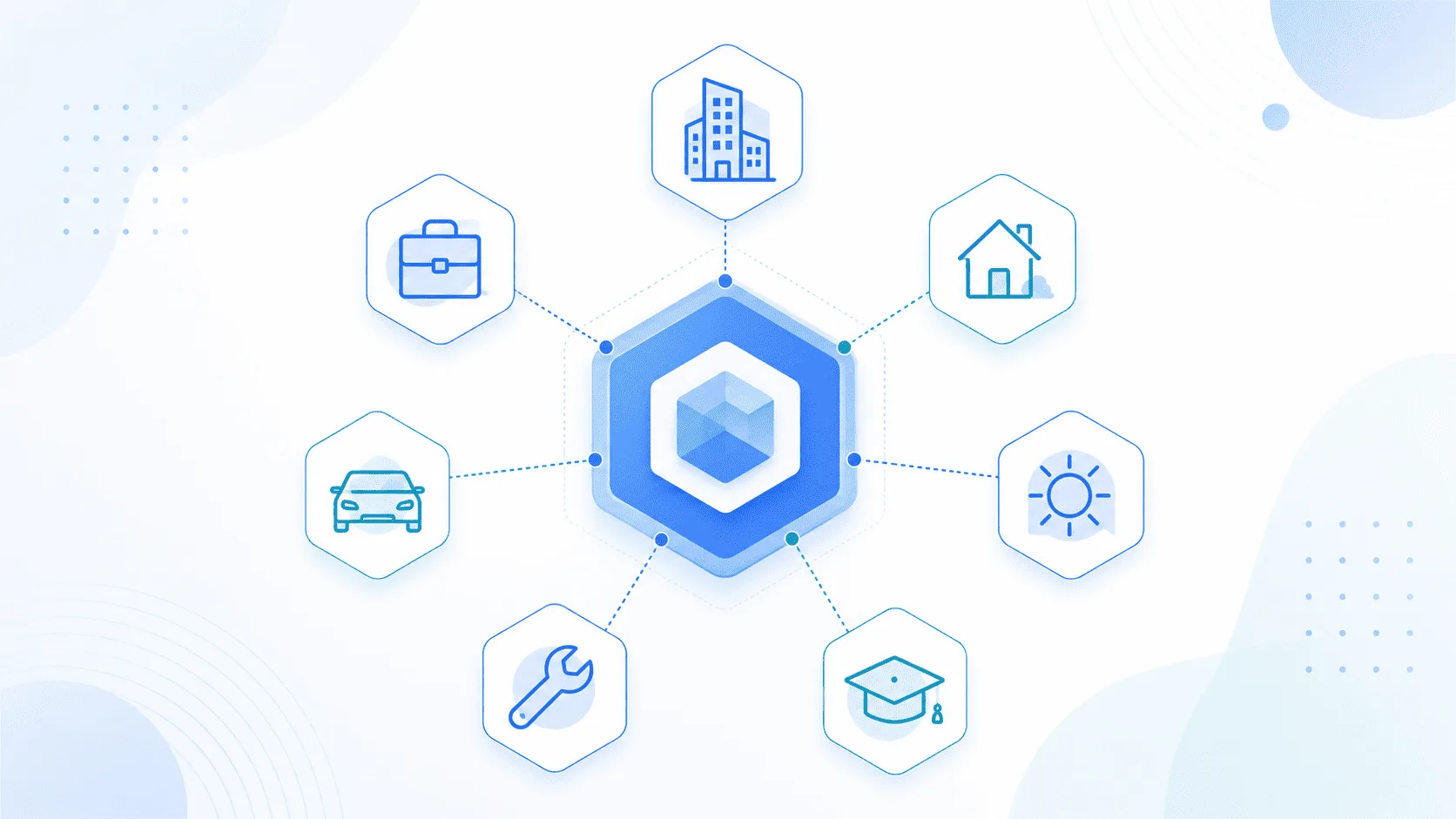
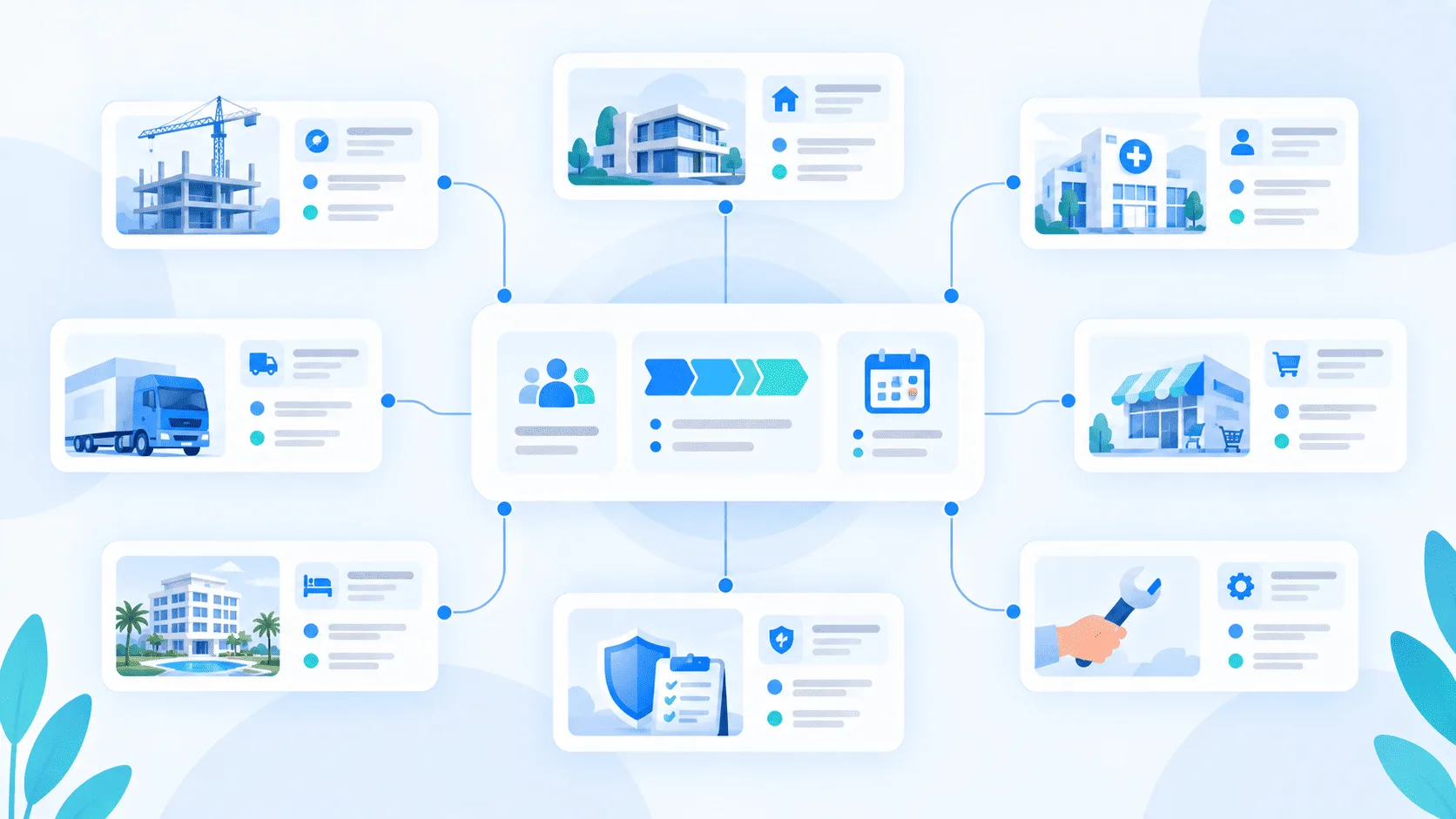
What are the 7 industries already covered by existing adaptation?
Construction, real estate, solar energy, education, home services, automotive, and B2B consulting. Each of these industries has its own on-the-ground concepts: site tracking and progress-based billing for construction, listing and viewing management for real estate, technical feasibility studies and financing tracking for solar, and candidate and payment management for education. Home services, automotive, and consulting each bring their own logic too, built around scheduling and recurring visits, vehicle and service history, or engagement tracking and deliverables.
How does industry adaptation work for construction and real estate?
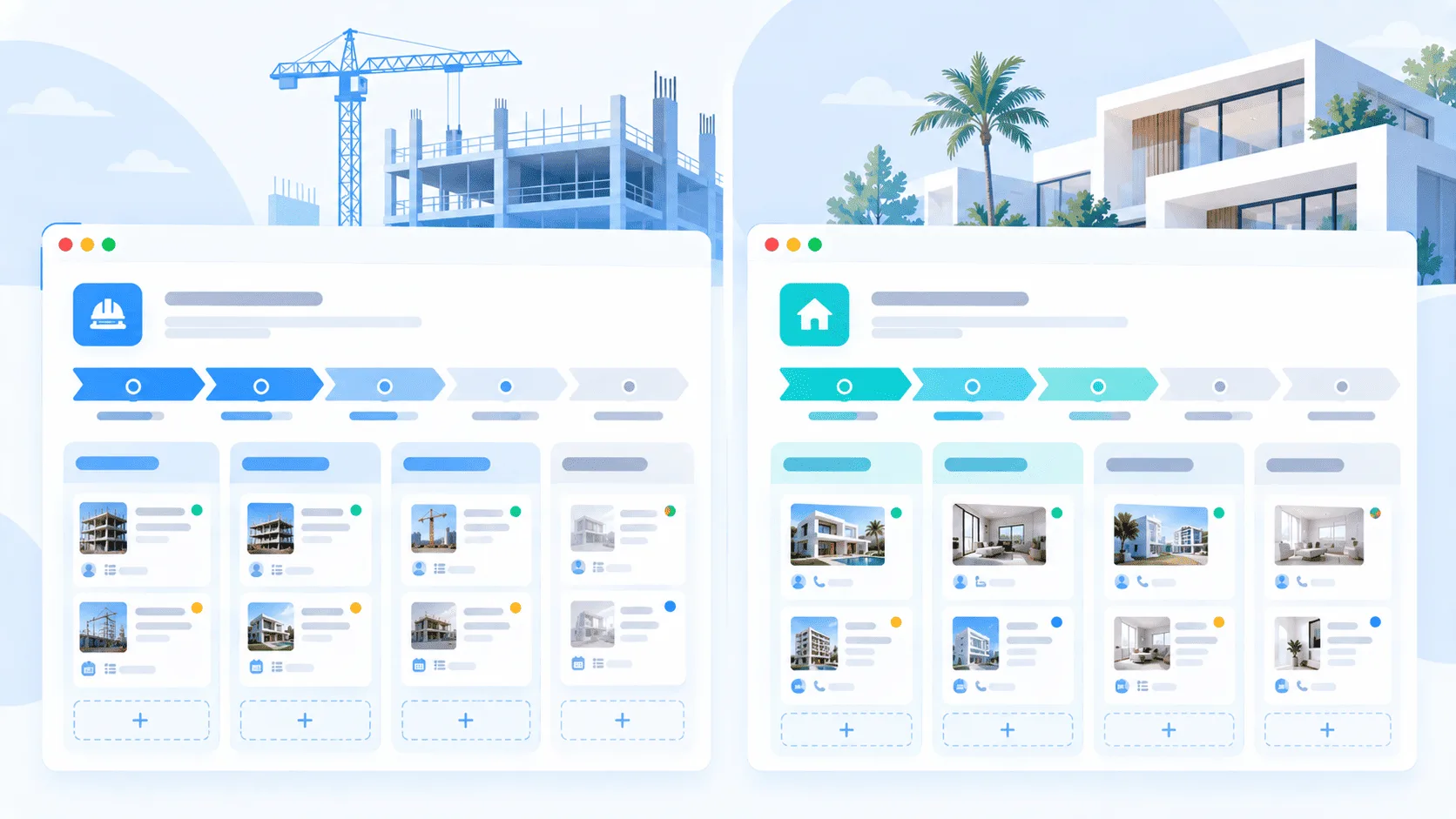
Construction teams don't track a generic "deal," they track a site, with phases, subcontractors, and progress-based billing tied to completion percentages rather than a single close date. A real estate custom CRM instead follows a listing through its own lifecycle: viewing scheduled, offer made, financing confirmed, signature. The underlying software is the same, but the pipeline stages and the fields visible on screen reflect what actually happens in each business, not a generic "won or lost" logic borrowed from software sales.
How does industry adaptation work for solar, education, and home services?
A solar installer's custom CRM tracks a feasibility study, a financing approval step, and an installation date, concepts that would be meaningless clutter in a real estate pipeline. An education-focused version tracks candidates through enrollment stages and links payment schedules directly to the record, since tuition timing matters as much as the enrollment decision itself. Home services businesses need something else again: recurring visit scheduling, service history per client address, and reminders tied to maintenance cycles rather than a one-time sale.
How does industry adaptation work for automotive and B2B consulting?
An automotive custom CRM keeps vehicle and service history at the center of the customer record, since a repeat customer's value comes from ongoing maintenance, not a single transaction. A B2B consulting version organizes around engagements instead of deals: scope, deliverables, and billing milestones tied to the actual shape of a consulting relationship, which rarely resembles a simple product sale with a single close date.
How does this adaptation actually show up inside the tool?
The CRM's core structure stays the same: leads, customers, pipeline, calendar, tasks. What changes is the vocabulary, the pipeline stages, and the reporting priorities by industry. For a real estate agency, the pipeline follows the stages specific to a listing, from viewing to signature. For a solar installer, it includes technical steps like feasibility studies or financing approval, concepts that mean nothing to a consulting firm. Nobody is looking at a screen full of fields that don't apply to their business.
What stays the same across every industry version?
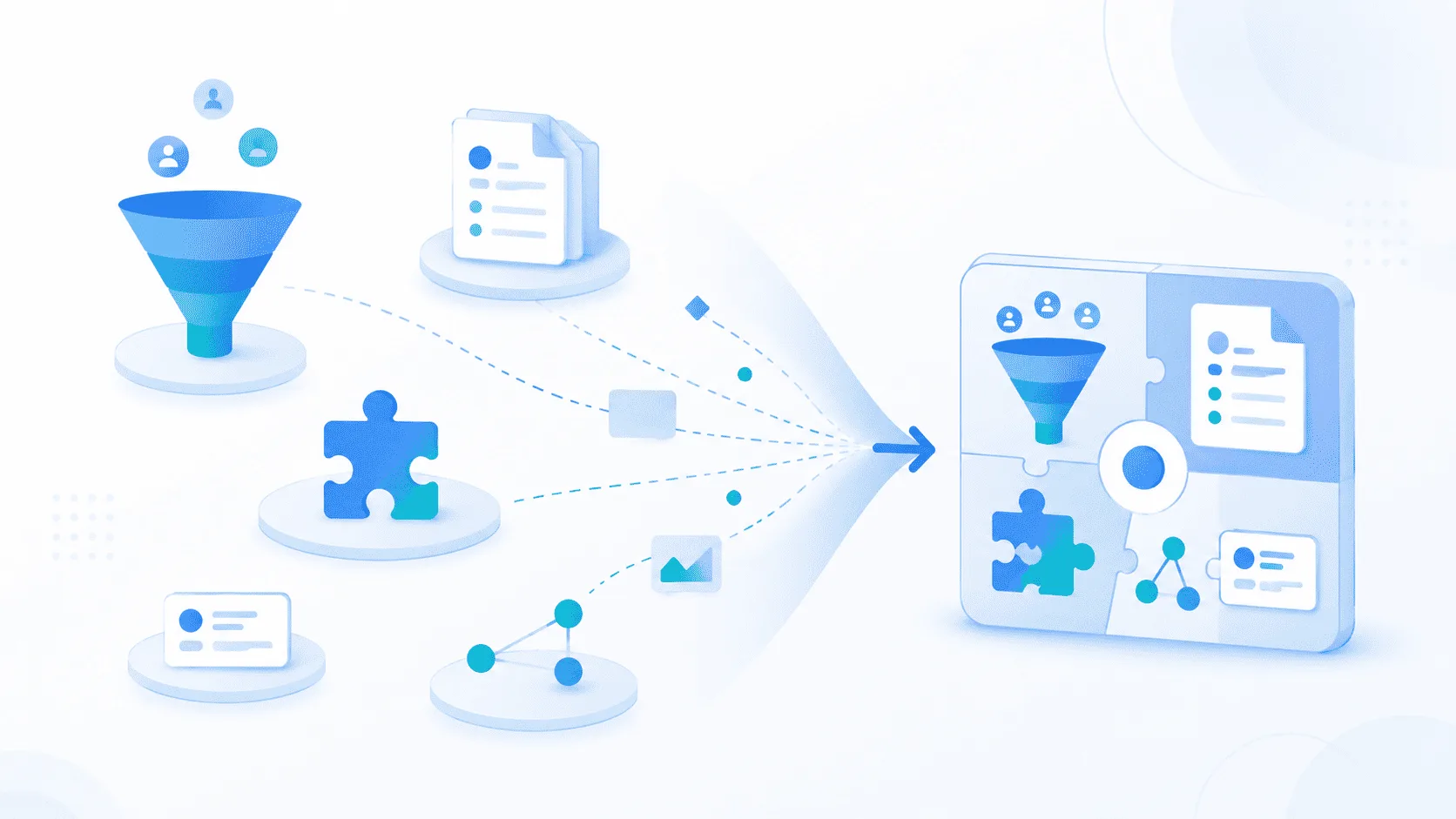
Underneath the industry-specific vocabulary, every version shares the same foundation: a central record for leads and customers, a configurable pipeline, a shared calendar, task tracking, and reporting. This is what keeps deployment fast even with industry adaptation involved, the team isn't building a different product for each sector, it's configuring the same reliable base to speak each industry's language and follow its actual workflow.
Does industry-specific adaptation limit the tool's future evolution?
No, it's actually the opposite. Starting from a structure already designed to adapt by industry makes future adjustments easier, since the foundation stays the same and only the specific elements evolve. A company that shifts priorities or adds a new line of business can evolve its custom CRM without starting from scratch.
What if a business doesn't fit neatly into one of the 7 industries?
The shared foundation stays flexible enough to handle a business that sits between two of the listed industries, or combines elements of several. A company offering both installation and ongoing maintenance, for instance, can borrow structure from more than one of the 7 models rather than being forced to pick just one. The adaptation work is about getting the vocabulary and pipeline right for how the business actually operates, not about fitting into a rigid category.
How does this affect the initial setup and cost?
Industry adaptation is already part of what's included in a standard project, it doesn't come as an extra line item on top of the base custom CRM software cost. Because the adaptation work for each of the 7 industries has already been mapped out, the setup doesn't start from a blank page, which keeps both the price and the timeline predictable rather than open-ended.
What should you check before implementation to make sure the adaptation fits?
Before signing off, it's worth confirming that the pipeline stages, terminology, and reporting priorities match how the business actually talks about its own work, not just a close approximation. This is exactly the kind of detail worth reviewing during preparation before implementation, so the adapted structure fits from day one instead of needing rework a few months in.
FAQ
What happens if my business doesn't exactly match any of the 7 listed industries?
The CRM's shared foundation stays flexible enough to adapt to similar businesses, with targeted adjustments on the points that genuinely differ.
Does industry-specific adaptation extend the implementation timeline?
No, since the adaptation work for each industry has already been done upfront, deployment stays within the usual 4 to 8-week range.
Can elements from several industries be combined for a mixed business?
Yes, the structure stays modular, which allows combining certain elements if the company operates across several types of activity in parallel.
Does moving into a new industry later require rebuilding the CRM?
No, since the shared foundation stays the same, adding a new line of business means configuring additional fields and pipeline stages, not starting over.
Is Monark CRM only available for these 7 industries?
These 7 cover the adaptation work already mapped out, but a service-based business outside that list can still be configured, using the closest existing model as a starting point.
Discover MONARK CRM, a customizable CRM, already built, adapted to your business.