Which project management software should an SME choose? The one that fits how your team really works: all your projects in one place, budget linked to who is working on what, clear roles for every decision, and a memory of past choices. It should be up and running in weeks and simple enough that your team actually uses it, which matters far more than how nice the interface looks.
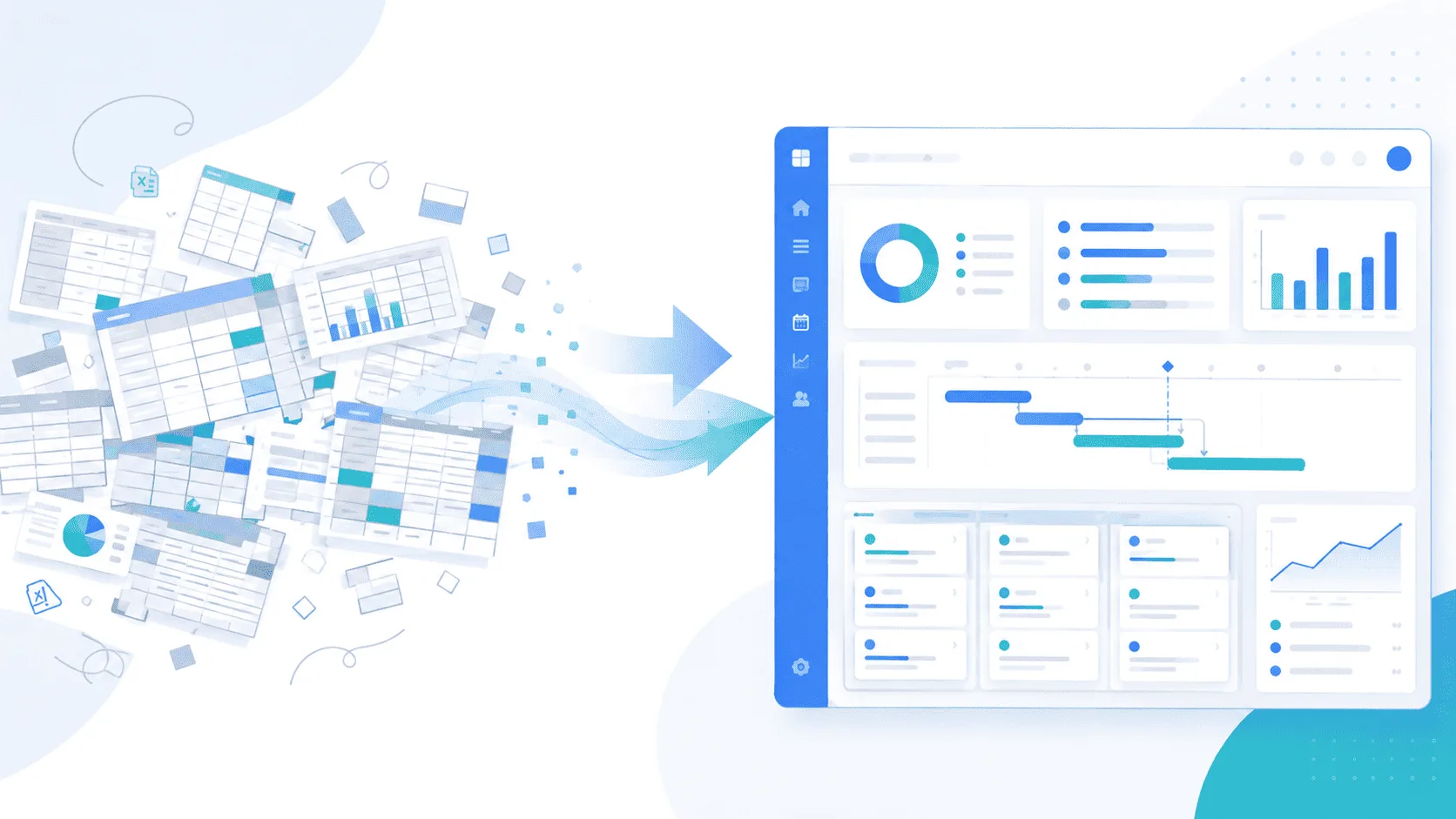
Why do spreadsheets stop working at some point?
A spreadsheet works fine with one project and one person keeping it up to date. The trouble starts when several projects run in parallel:
❌ Each project lead has their own version of the file
❌ The numbers never quite match
❌ Real budget spending is never visible in real time
The result: you only find out about overspending when it's too late to do anything about it. Good project management software should prevent exactly that.
What should you actually look for before choosing?
Beyond the marketing feature list, four things really matter day to day.
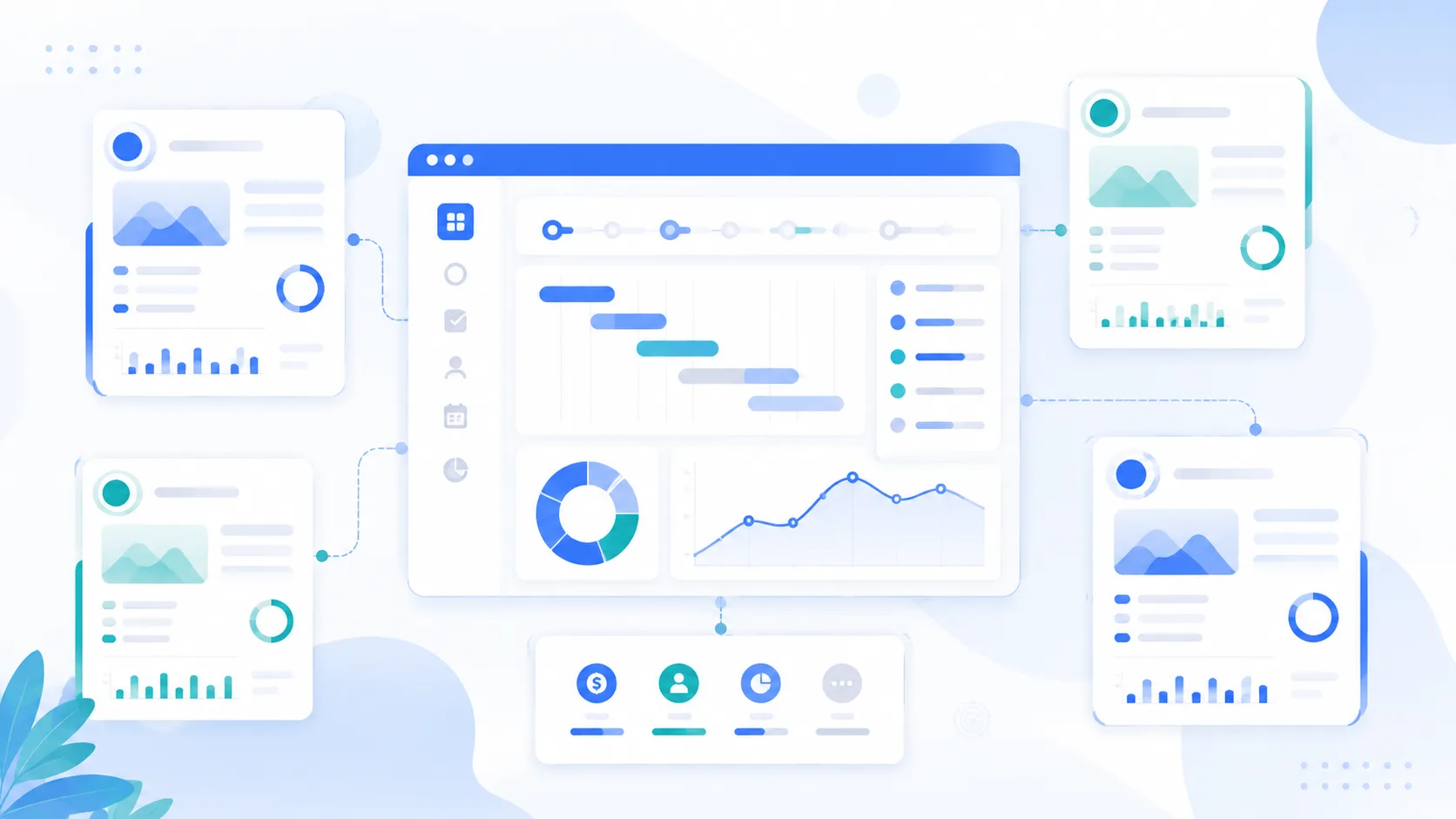
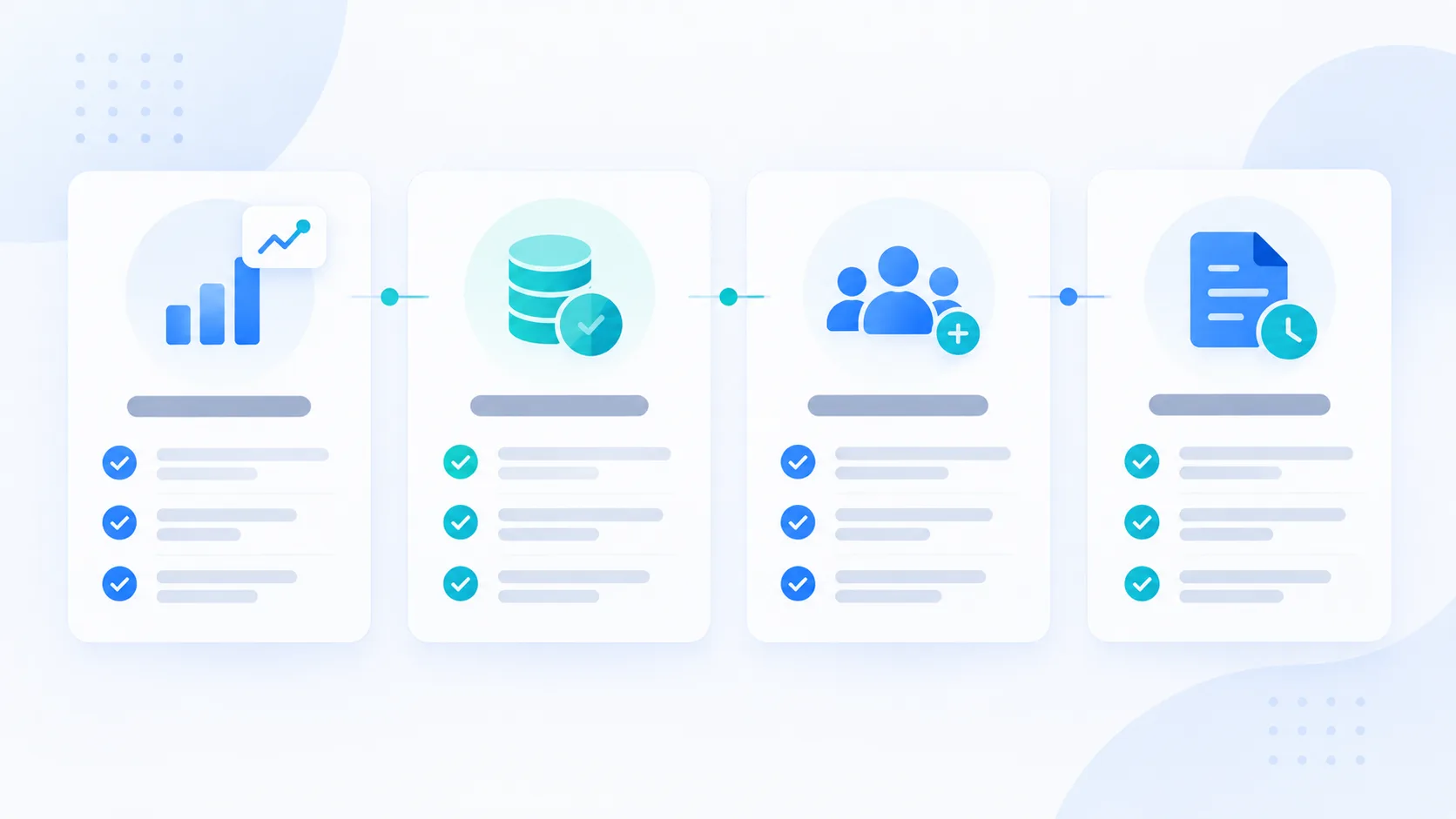
✅ A full portfolio view.. Being able to see at a glance where every project stands, not just the one you happen to be looking at right now. Without this, "how are we doing overall" stays a question you can only answer by opening five tabs and doing the math yourself.
✅ Budget genuinely connected to staffing*.* A number that moves on its own, disconnected from staffing and capacity planning, isn't very useful. If the tool can't tell you that a budget is slipping because three people just got added to a project, it's only showing you half the picture.
✅ Clear roles for every decision.** Knowing who decides, who approves, who just needs to stay informed, otherwise every decision drags on simply because nobody knows whose call it is. This is exactly the gap a RACI module is built to close.
✅ A memory of past decisions. When someone leaves the team, the context and reasoning behind past choices shouldn't leave with them. A tool that only shows the current state, with no trace of why a decision was made three months ago, forces the same debates to happen twice.
How much does project management software typically cost for an SME?
Pricing usually scales with the number of users and the depth of features, rather than being a flat fee. For a small team, expect a per-user monthly cost that stays modest, often less than the price of a single team lunch per person, but the real cost to watch isn't the subscription. It's the time lost during a badly planned rollout, or the cost of a tool that gets abandoned after three months because nobody adopted it. A cheap tool nobody uses is more expensive than a well-priced one the team actually relies on.
Build vs. buy: is a custom tool ever the right call?
For most SMEs, no, and not because a custom build can't be done well. A fully custom tool means owning its maintenance indefinitely, retraining the team every time a workflow changes, and rebuilding features that established platforms already solved years ago. Building custom usually makes sense only when the project tracking need is genuinely unusual, tied to a very specific industry process a generic tool can't represent at all. Outside that case, the time spent building is time not spent running the business.
Does an SME really need an AI assistant for this?
That's a fair question, and a lot of tools bolt on artificial intelligence purely for the marketing angle, without any real benefit for the end user. But a well-designed assistant genuinely changes daily work: instead of spending half an hour digging through reports to find out which projects are over budget this month, you ask directly in plain language and get a reliable answer, built from the project's actual data.
Cloud-based vs. on-premise: does it still matter for an SME?
For nearly all SMEs today, cloud-based is the practical default. It removes the need for internal infrastructure, updates happen without IT involvement, and the team can work from anywhere without a VPN setup. On-premise still comes up for specific regulatory or data-residency requirements, mostly in sectors handling sensitive client data under strict contracts, but outside that case it usually adds cost and complexity without a matching benefit.
How long does it take to set up this kind of tool?
Unlike a fully custom build, which can easily take 6 to 12 months before the first genuinely usable version, a pre-built tool like Core is typically deployed within a few weeks. Three deployment levels are available depending on actual needs:
| Level | What it includes |
|---|---|
| Standard | A quick start with the base setup |
| Personalized | Custom workflows and permissions |
| Advanced | A client portal and integrations with the tools already in place |
In every case, human support is part of the process, not just access to software delivered as-is.
What questions should you ask a vendor before signing?
A short list worth going through before any commitment. Can you see real staffing and budget data together, or are they in separate modules that never quite match? Is role clarity (who approves what) built in, or does it depend on the team remembering to enforce it manually? What does onboarding actually look like week by week, not just in a sales deck? And what happens to your data if you decide to leave the platform later? A vendor that answers these clearly, without dodging, is usually a good sign in itself.

Common mistakes when choosing project management software
❌ Choosing based on interface alone*.* A clean-looking demo is not the same as a tool that holds up once 40 real tasks and five active projects are loaded into it. Ask to see it with realistic data, not a curated example.
❌ Ignoring the migration cost from what you already use. Moving three years of project history out of a spreadsheet or an old tool always takes longer than expected. Factor that transition time into the decision, not just the price of the new tool.
Project management software for a small team vs. a growing SME
Under 10 people. Even a small team benefits from centralization sooner than expected, mainly the moment a client or an external partner enters the picture and needs a clear, single source of truth.
Scaling past 20-30 people. This is usually where informal habits (a shared doc, a running Slack thread) genuinely break down, and where the cost of not centralizing starts to show up as missed deadlines rather than just minor friction.
What Monark Core offers
That's exactly what Monark Core offers: a workspace that centralizes projects, budgets, and decisions, with a RACI module to clarify roles and a project memory module that keeps past trade-offs accessible months later, even after a team member has moved to a different role.
How to keep the decision from becoming outdated in a year
A tool chosen for today's team size can start to feel wrong a year later if it doesn't grow with the team. Before committing, ask what the next tier of the platform looks like, not just the entry-level plan. A vendor that can show a clear upgrade path, rather than forcing a full re-migration later, saves a second buying decision down the line.
FAQ
How long does implementation usually take?
For a pre-built platform, a few weeks for a standard setup. A fully custom build can take 6 to 12 months before it's genuinely usable.
Is project management software worth it for a very small team?
Yes, past a certain point of complexity, usually once more than one project or an external client enters the picture. Below that, a simpler tool may still be enough for a while.
What's the biggest mistake SMEs make when choosing?
Picking based on how the interface looks in a demo, rather than testing it with real project data and asking how it handles the messy, everyday cases.
Should pricing be the main decision factor?
- A cheaper tool the team abandons after three months costs more than a slightly pricier one that actually gets adopted and used daily.
Can you switch tools later if the first choice doesn't work out?
Yes, but migration takes time and effort, which is exactly why it's worth asking about data portability and support before signing, not after.
Discover MONARK CORE, the project portfolio management platform that centralizes projects, resources, staffing, and budgets.