
What is a RACI project management tool? It is a solution that helps teams define and manage who is Responsible, Accountable, Consulted, and Informed for each project activity or decision.
In RACI project management, clear responsibilities help prevent approval delays, duplicated work, and confusion between project stakeholders.
"I thought you were supposed to approve that."
Every project manager has heard this sentence, often at the worst possible moment. The problem is rarely a lack of skills. More often, it is a lack of clarity about who owns each decision.
A RACI project management tool helps organizations establish clear responsibilities, improve project coordination, and maintain accountability throughout the project lifecycle.
Why Does Unclear Role Ownership Cost So Much?
When project responsibilities are not clearly defined, decisions become slower, communication becomes inefficient, and teams risk repeating work.
Two common situations illustrate this problem:
❌ A stalled decision. Nobody knows who has final approval authority, so a decision remains pending while other activities depend on it.
❌ A decision made twice. A team member makes a decision without the appropriate authority, which may result in revisions, rework, and additional costs.
The RACI method addresses these challenges by identifying who performs the work, who approves the results, who should be consulted, and who needs to stay informed.
What Is RACI Project Management?
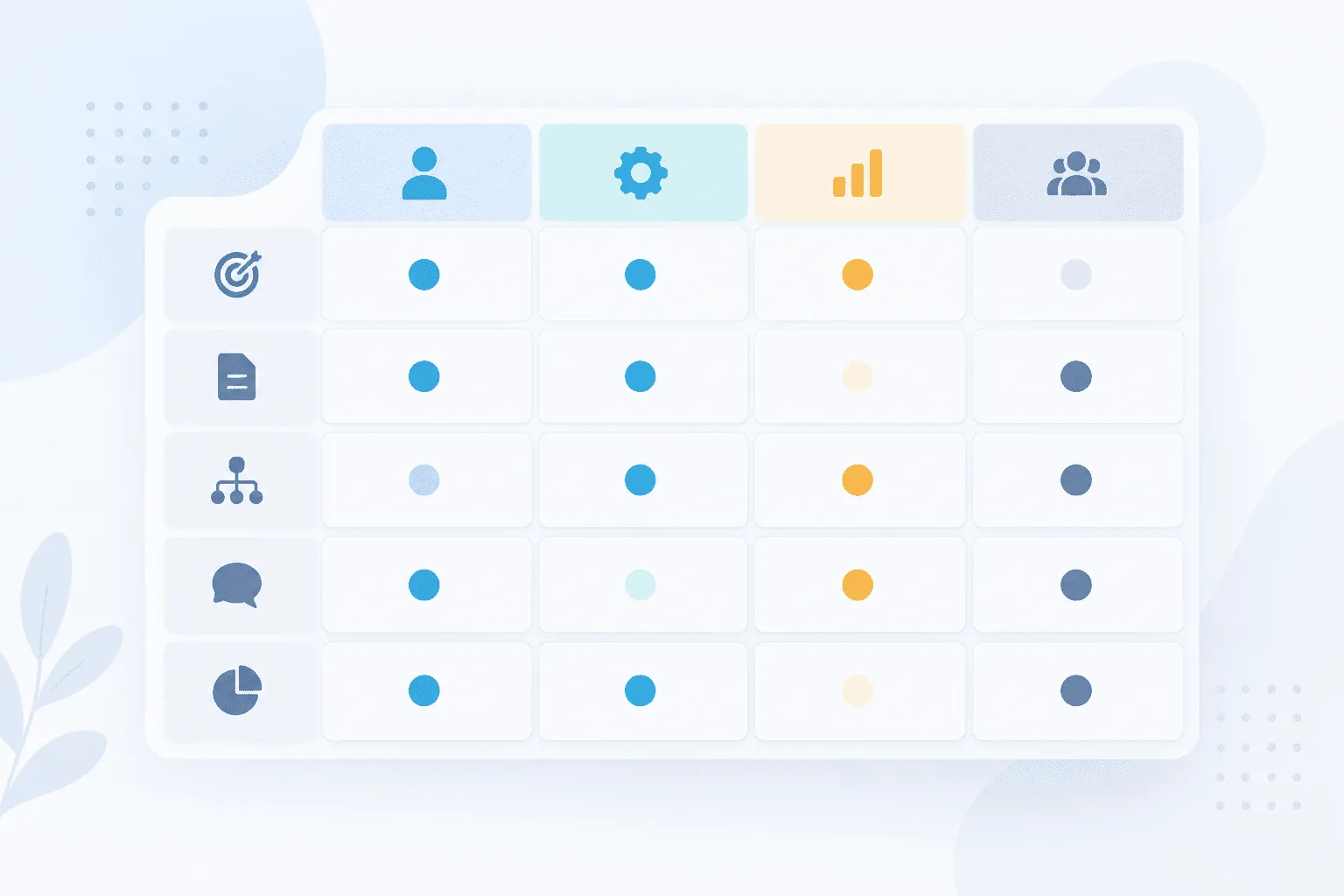
RACI project management is a responsibility assignment approach that defines four distinct roles for project tasks and decisions.
RACI stands for Responsible, Accountable, Consulted, and Informed.
| RACI Role | Definition | Key Responsibility |
|---|---|---|
| Responsible (R) | Person performing the work | Completes the assigned activity |
| Accountable (A) | Person ultimately answerable for the result | Owns the outcome and approves completion |
| Consulted (C) | Person providing expertise or input | Participates before important decisions |
| Informed (I) | Person requiring updates | Receives relevant progress or decision information |
A well-structured RACI matrix generally assigns one Accountable owner per activity, while several people may contribute to its execution.
For IT companies, agencies, and SMEs, this framework helps clarify interactions between project managers, developers, designers, clients, and other stakeholders.
How to Create a RACI Matrix Step by Step
Building a useful RACI matrix does not require a complex process. What matters most is defining responsibilities at the right level of detail.
✅ Step 1: List project activities and decisions.
Identify specific deliverables, tasks, and approval points. Use clear activities such as "Approve final wireframes" instead of broad phases like "Design."
✅ Step 2: Identify project stakeholders.
Include everyone involved in performing, approving, advising on, or receiving information about project activities.
✅ Step 3: Assign the RACI roles.
For each activity, determine who is Responsible, Accountable, Consulted, and Informed.
✅ Step 4: Validate accountability.
Check that each activity has one clearly identified Accountable owner and that responsibilities are understood by the team.
✅ Step 5: Review the matrix regularly.
Update assignments when project requirements, team members, or approval processes change.
A RACI project management tool can help teams maintain this information in a centralized project environment instead of managing separate responsibility spreadsheets.
RACI Matrix Example for a Software Development Project

Consider a software development project involving a project manager, developer, UI/UX designer, QA engineer, and client representative.
The following example illustrates how responsibilities can be distributed across important project activities.
| Project Activity | Project Manager | Developer | Designer | QA Engineer | Client |
|---|---|---|---|---|---|
| Define requirements | R | C | C | I | A |
| Approve UI/UX design | R | C | R | I | A |
| Develop application features | A | R | C | C | I |
| Perform functional testing | A | R | I | R | I |
| Approve final delivery | R | C | I | C | A |
R = Responsible | A = Accountable | C = Consulted | I = Informed
This example demonstrates how different people may take different roles throughout the project.
For instance, the developer is Responsible for implementing application features, while the project manager remains Accountable for their completion.
The client may be Accountable for final design approval, while the designer and project manager contribute to the preparation of the deliverable.
The exact assignments should always reflect the organization's governance and approval process.
Common RACI Project Management Mistakes to Avoid
Even a well-designed RACI matrix can become ineffective when responsibilities are poorly assigned or not maintained.
❌ Assigning multiple Accountable owners. Shared accountability can create uncertainty about who makes the final decision.
❌ Confusing Responsible and Accountable. Completing a task and owning its outcome are different responsibilities.
❌ Consulting too many stakeholders. Excessive consultation can slow decisions without improving their quality.
❌ Creating a matrix only at project kickoff. Roles may change as projects evolve, and an outdated matrix can mislead team members.
❌ Using vague project activities. Broad assignments such as "Manage development" provide less clarity than specific tasks or approval decisions.
❌ Keeping the RACI matrix disconnected from project execution. When responsibility assignments exist only in an isolated document, teams may struggle to maintain consistency.
Why Use a RACI Project Management Tool?
A RACI project management tool helps organizations translate the RACI framework into everyday project operations.
Instead of maintaining responsibility assignments in disconnected documents, teams can connect roles with project activities and management processes.
The main benefits include:
✅ Clear responsibility assignment. Everyone understands their role and the person accountable for each decision.
✅ Centralized project visibility. Project managers can consult responsibility structures in a shared environment.
✅ Better stakeholder coordination. Teams know who must be consulted or informed before decisions are finalized.
✅ Reduced approval confusion. Explicit accountability helps avoid unnecessary delays and duplicated decisions.
✅ Improved multi-project management. Organizations can maintain distinct responsibility structures across simultaneous projects.
For agencies and IT services companies, these capabilities are particularly valuable when employees and client representatives participate in several projects.
RACI Project Management Tool vs. Excel: Which Is Better?
A RACI matrix can be created in Excel, Google Sheets, or other spreadsheet tools. For small and relatively stable projects, spreadsheets can be sufficient.
However, as projects become more complex, dedicated RACI project management software can help integrate role assignments with project execution.
| Feature | Excel RACI Matrix | RACI Project Management Tool |
|---|---|---|
| Role assignment | Manual spreadsheet | Structured role management |
| Multiple projects | Separate or consolidated sheets | Centralized project visibility |
| Responsibility updates | Manual maintenance | Managed within project workflows |
| Stakeholder coordination | External communication often required | Can support integrated collaboration |
| Project tracking | Requires additional setup | Connected with project activities |
| Resource management | Separate tracking | Can connect roles with staffing information |
| Budget visibility | Separate or linked sheets | Can integrate project financial information |
Excel remains a practical starting point for basic responsibility mapping.
A dedicated solution becomes more useful when organizations need to maintain responsibility clarity alongside project planning, resources, and budgets.
For a broader comparison, read our guide to Excel alternatives for project management.
RACI vs. RASCI vs. DACI: Which Framework Should You Choose?
Several responsibility assignment frameworks exist. The most suitable approach depends on the complexity of the project and its decision-making process.
| Framework | Main Difference | Best Suited For |
|---|---|---|
| RACI | Responsible, Accountable, Consulted, Informed | General project management |
| RASCI | Adds a Support role | Projects requiring explicit supporting contributors |
| DACI | Driver, Approver, Contributors, Informed | Product development and decision-oriented processes |
For many SMEs, RACI provides sufficient clarity without introducing unnecessary organizational complexity.
More complex projects may benefit from RASCI or DACI when their additional role distinctions solve a specific coordination problem.
RACI Project Management for Small Teams and Multi-Project Organizations
The value of RACI is not limited to large organizations.
Small teams with fewer than 10 people
When teams are small, responsibilities are often managed informally. However, involving external clients, suppliers, or stakeholders makes clear accountability more important.
A lightweight RACI matrix helps clarify approval responsibilities without introducing excessive administrative work.
Organizations managing multiple projects
When employees participate in several projects, their responsibilities may change depending on the context.
A developer may be Responsible for one deliverable, Consulted on another project, and Informed about a third.
Centralized responsibility management helps organizations maintain clarity across these different assignments.
At this scale, role clarity also connects naturally with project portfolio management and resource planning.
How MONARK Core Supports RACI Project Management
MONARK Core is a project portfolio management platform that centralizes project tracking, resource allocation, staffing, and budget visibility.
Its project role management capabilities help organizations clarify responsibilities within their project environments.
Structured project roles
Project leads, team members, client contacts, and observers can be organized according to their involvement in each project.
Centralized project information
Project responsibilities can be managed alongside other essential project information rather than maintained in disconnected documents.
Multi-project visibility
Organizations managing several simultaneous projects benefit from having their project structures accessible in one environment.
Connection with resource capacity planning
Role clarity answers who is responsible for the work. Capacity planning helps determine whether that person has enough time available to perform it.
These two perspectives complement each other, particularly when the same employees work across multiple projects.
Learn more in our guide to resource capacity planning software.
RACI and Client-Facing Projects: Why Accountability Matters
For agencies and IT service providers, responsibility clarity directly affects client communication.
When a client requests approval, feedback, or a project update, the team should know exactly who is responsible for providing the answer.
A RACI matrix can include client representatives directly in the responsibility structure, ensuring that external approval points are clearly identified.
This approach helps improve communication, reduce misunderstandings, and establish more predictable project governance.
How to Keep a RACI Matrix Updated
A RACI matrix delivers value only when it reflects the current project organization.
Review responsibility assignments:
- At the beginning of each major project phase.
- When a new team member joins or leaves.
- When project scope or requirements change.
- When approval responsibilities are modified.
- When recurring decision delays reveal unclear ownership.
A RACI project management tool can help teams maintain responsibility information alongside their project workflows, making the matrix easier to review and update.
FAQ About RACI Project Management Tools
What is a RACI project management tool?
A RACI project management tool helps teams define, organize, and maintain responsibility assignments using the Responsible, Accountable, Consulted, and Informed framework.
What is the purpose of RACI in project management?
RACI project management helps organizations clarify who performs tasks, who approves results, who provides input, and who must receive updates.
How do you create a RACI matrix?
Start by listing project activities, identifying stakeholders, assigning RACI roles, and validating that each activity has one Accountable owner.
What is the difference between Responsible and Accountable?
Responsible refers to the person performing the work. Accountable refers to the person ultimately answerable for the outcome or approval.
Can a person be both Responsible and Accountable?
Yes. In small teams, the same person may perform the activity and remain Accountable for its completion.
Is Excel enough for RACI project management?
Excel can be sufficient for simple projects. Dedicated project management tools can provide additional benefits when responsibilities must be coordinated across multiple projects and stakeholders.
Can RACI be used in agile software development?
Yes. Agile teams can use lightweight RACI assignments to clarify responsibilities and approval decisions without introducing unnecessary process.
How often should a RACI matrix be updated?
A RACI matrix should be reviewed whenever project responsibilities, stakeholders, or major deliverables change.
Improve Project Accountability with MONARK Core
Clear responsibilities are essential for effective project coordination, especially when teams manage multiple projects and client stakeholders.
Discover MONARK Core, the project portfolio management platform that centralizes projects, team roles, resources, staffing, and budgets.